Residential Proxies, Unlocking Hidden Prices and Geo-Targeted Web Scraping
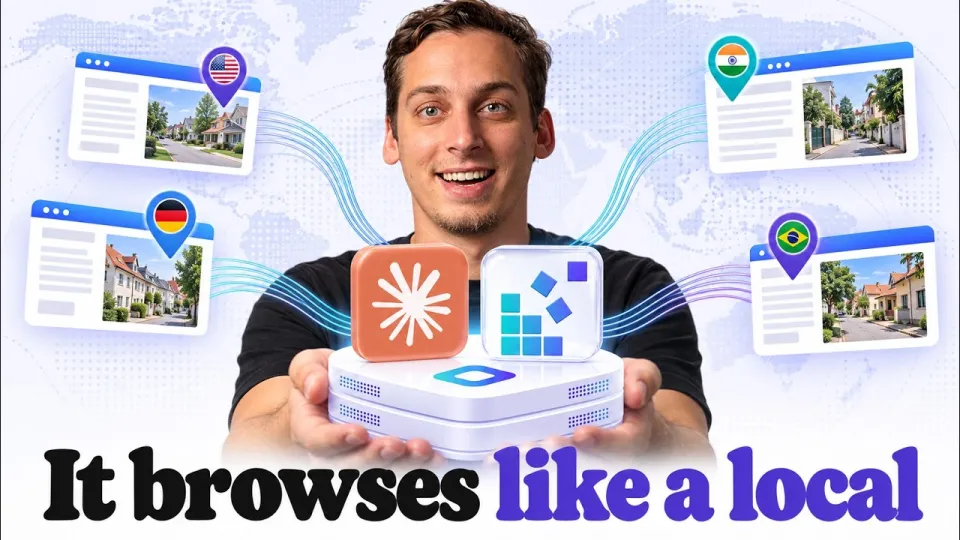
Video: This Claude Code Agent Uses Residential Proxies to Find Hidden Prices
· based on the channel Lukas Margerie
Residential proxies are specialized proxy servers that route internet traffic through actual residential internet service providers (ISPs). Unlike VPNs or data center proxies, residential proxies use IP addresses assigned to real home users, making them less likely to be detected or blocked by websites. This unique characteristic allows users to access geo-targeted content, including hidden or regional pricing, which is often inaccessible via conventional VPNs or data center IPs.
What Are Residential Proxies and How Do They Work?
Residential proxies act as intermediaries between your device and the internet by forwarding your web requests through real devices connected to home ISPs. Since the IP addresses belong to legitimate residential users, websites treat requests as if they originate from actual customers, not automated bots or data centers. This makes residential proxies particularly valuable for activities like web scraping, ad verification, and accessing region-locked content.
Key features include:
- Real ISP IPs: Each proxy IP corresponds to a real home connection.
- Geo-targeting: Users can select proxies from specific countries or regions.
- Rotating IPs: Residential proxy providers often offer rotating proxies, supplying a fresh IP address for each connection to avoid detection.
VPN vs Proxy: Why Residential Proxies Are Different
A VPN typically routes all your internet traffic through a single data center server, which can be easily flagged by websites looking for suspicious activity. In contrast, residential proxies use a large pool of IPs from real home users, making it difficult for websites to detect automation or proxy use.
VPNs tend to:
- Use data center IPs that are often blacklisted.
- Route all traffic through one server, limiting geo-targeting flexibility.
Residential proxies:
- Provide diverse IPs from multiple real users.
- Enable fine-grained geo-targeting by selecting IPs from specific countries.
Rotating Residential Proxies for Effective Web Scraping
Rotating proxies change the IP address used for each web request. This rotation helps:
- Evade anti-bot mechanisms by mimicking different users.
- Access localized content by switching IPs among targeted regions.
For example, when scraping pricing pages of SaaS platforms or streaming services, rotating residential proxies allow a scraper to appear as multiple distinct local users, each from a different country. This approach reveals hidden prices that vary by region, such as Spotify costing $12.99/month in the US but only about $1.45/month in India, or Canva Pro subscriptions priced at $144/year in one country and $42 in another.
Using Residential Proxies with AI Agents and Web Automation
Combining residential proxies with AI agents like Claude Code and automation frameworks such as Playwright enhances the ability to scrape and analyze data from multiple regions seamlessly. Claude Code can be programmed to open pricing pages through residential proxies in countries like the US, Germany, Brazil, and India, then aggregate and compare the pricing data automatically without manual intervention or VPN use.
Steps to implement:
- Set up residential proxies with geo-targeting capabilities.
- Configure AI agents to route requests through these proxies.
- Automate browsing and data extraction with Playwright.
- Aggregate and analyze pricing or content variations.
Regional Pricing Insights from Residential Proxy Data
By leveraging residential proxies, businesses and consumers can uncover significant price disparities across regions for services such as Spotify, Canva, ChatGPT, and Netflix. These insights help SaaS providers and template sellers understand how competitors adjust prices geographically and guide strategic pricing decisions. For consumers, it offers the possibility to access more affordable plans by simulating being in a lower-cost region.
Common Questions About Residential Proxies
Are residential proxies legal?
Residential proxies are legal when used ethically and comply with website terms of service. They are widely used for market research, ad verification, and competitive intelligence.
How do residential proxies compare in speed to VPNs?
Residential proxies may be slightly slower than VPNs due to routing through home ISP connections but offer higher reliability in bypassing geo-restrictions and anti-bot systems.
Can residential proxies be detected?
While harder to detect than data center proxies, sophisticated anti-fraud systems can sometimes identify proxy use if patterns are suspicious. Rotating proxies reduce this risk.
What is the best provider for residential proxies?
Providers like DataImpulse offer extensive residential proxy networks with country targeting and rotating IPs, ideal for web scraping and pricing analysis.
Useful Links
- DataImpulse Residential Proxies – Residential proxy service used for geo-targeted scraping.
- Claude Code – AI agent platform for automation.
- Playwright – Web automation tool.
Conclusion
Residential proxies are indispensable tools for accessing geo-specific web content, revealing hidden regional pricing, and performing undetectable web scraping. By routing traffic through real home ISP connections and using rotating IPs, these proxies circumvent limitations of VPNs and data center IPs. Combining residential proxies with AI-driven agents like Claude Code and automation frameworks such as Playwright enables efficient, scalable, and precise data extraction across multiple countries. For those interested, DataImpulse provides a robust residential proxy network, as highlighted by Lukas Margerie, whose analysis offers practical insights into regional pricing disparities of popular SaaS and streaming platforms. Explore residential proxies to gain a competitive edge in market research or to find better subscription deals worldwide.
Key takeaways
- Residential proxies route traffic through real home ISP connections, avoiding data center IP flags.
- Rotating residential proxies provide a fresh IP on each request, enhancing anonymity and access.
- They enable geo-targeting by simulating local users in specific countries for accurate pricing data.
- Used with AI agents and tools like Claude Code and Playwright for automated web scraping.
- Residential proxies reveal price differences in SaaS and streaming services across regions.
Questions & answers
What are residential proxies and why are they used?
Residential proxies are IP addresses assigned to real home users, used to route internet traffic through actual residential ISPs. They are employed to access geo-targeted content, avoid detection by websites, and conduct web scraping more effectively.
How do residential proxies differ from VPNs?
Unlike VPNs that route traffic through data center servers with easily flagged IPs, residential proxies use real home ISP IPs, making requests appear as if from local users. This reduces the risk of blocking and enables accurate geo-targeting.
Can residential proxies reveal different prices for the same service?
Yes, residential proxies allow users to simulate browsing from various countries, revealing regional price differences for services like Spotify, Canva, ChatGPT, and Netflix that are otherwise hidden behind geo-restrictions.
What tools work well with residential proxies for web scraping?
AI agents like Claude Code combined with web automation frameworks such as Playwright work effectively with residential proxies to automate data extraction and analyze pricing or content variations across different regions.
Source: This Claude Code Agent Uses Residential Proxies to Find Hidden Prices · Markdown version