How to Understand and Navigate the AI Memory Shortage
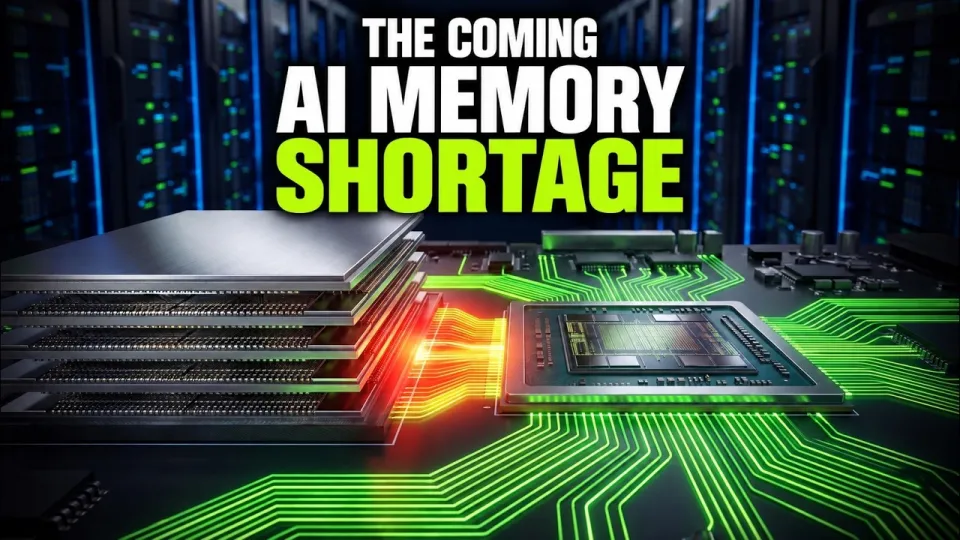
Video: The Coming AI Memory Shortage
· based on the channel Computer Age
The AI memory shortage is emerging as a key bottleneck in scaling artificial intelligence systems, driven primarily by limited supply of high-bandwidth memory (HBM) and DRAM needed for AI chips. AI workloads depend on fast, large-capacity memory to move data efficiently between storage and processors. However, HBM manufacturing is complex and constrained by advanced packaging and factory capacity, resulting in allocation of production rather than outright stock shortages.
Why AI Memory Shortage Happens
AI systems require more than just powerful processors; they demand high-speed data movement facilitated by memory technologies like HBM. HBM stacks multiple DRAM dies vertically to deliver extremely high bandwidth compared to traditional memory. This capability is essential for AI chips to process large datasets rapidly. However, producing HBM is challenging due to advanced packaging techniques such as TSMC's CoWoS (Chip on Wafer on Substrate) and the need for precise factory processes.
Consequently, HBM supply is limited by:
- Complex manufacturing steps increasing production time.
- Limited number of foundries and assembly plants capable of HBM production.
- Allocation of capacity to major customers like Micron, Samsung, and SK hynix.
These factors create a memory wall, where chip performance improvements are stalled by insufficient memory bandwidth and capacity.
The Role of HBM and DRAM in AI Chips
HBM differs from traditional DRAM by offering higher bandwidth through 3D stacking and wider interfaces. AI accelerators such as GPUs and specialized AI chips integrate HBM to meet the intensive data movement requirements of training and inference. The transition to HBM4 generation aims to further increase bandwidth and capacity but faces even greater manufacturing challenges.
DRAM remains critical for general memory needs in AI data centers, but the scarcity of HBM limits the overall system performance since HBM acts as the high-speed cache close to the processor. AI infrastructure providers compete fiercely for HBM supply, impacting who can deploy new AI models first.
What Allocation Means in Memory Production
When manufacturers say production is "allocated," it means the available capacity is pre-booked by customers and not freely available on the open market. This can lead to:
- Longer lead times for new orders.
- Higher prices as demand outstrips supply.
- Restricted access for smaller or late buyers.
Allocation does not mean empty shelves everywhere but indicates tight supply conditions and prioritization of key clients. Suppliers like Micron, Samsung, and SK hynix typically allocate production to strategic partners, affecting the broader AI ecosystem.
Signals to Watch in the AI Memory Market
To understand how the AI memory shortage evolves, watch for these indicators:
- Price Trends: Rising HBM and DRAM prices signal tightening supply.
- Lead Times: Increasing order fulfillment delays reveal capacity constraints.
- Allocation Announcements: Statements from suppliers about production allocation hint at market tightness.
- Capacity Expansions: Investments in new fabs or packaging lines by TSMC or memory makers suggest future relief.
Monitoring these signals helps anticipate how the shortage may ease or worsen, influencing AI deployment schedules.
Potential Easing of the AI Memory Bottleneck
Several factors could alleviate the memory shortage over time:
- Scaling production of HBM4 with improved yields.
- Expanding factory capacity by leading manufacturers.
- Advances in packaging technologies increasing throughput.
- The rebound effect, where higher prices incentivize more supply and innovation.
However, these improvements take years due to the complexity of semiconductor manufacturing and the capital-intensive nature of fabs.
Conclusion
The AI memory shortage is a critical challenge shaping the pace of AI innovation. It stems from limited HBM and DRAM supply constrained by manufacturing complexity and factory allocation. This shortage manifests through higher prices, longer lead times, and restricted access rather than empty shelves. Watching market signals like pricing, lead times, allocation notices, and capacity expansions provides insight into the evolving landscape. While relief is possible through capacity growth and technology advances, these changes require significant time. Understanding these dynamics is essential for AI developers and infrastructure providers planning deployment strategies.
This analysis is based on insights from the Computer Age channel’s documentary The Coming AI Memory Shortage, which offers a detailed visual explanation of the underlying technology and market factors.
Key takeaways
- AI memory shortage driven by limited high-bandwidth memory (HBM) production capacity
- HBM4 and DRAM supply constrained by complex manufacturing and factory allocation
- AI chips depend critically on memory bandwidth and packaging technology like TSMC CoWoS
- Shortage manifests as higher prices, longer lead times, and restricted access, not empty shelves
- Four market signals to watch: pricing, lead times, allocation notices, and capacity expansions
Questions & answers
What is causing the AI memory shortage?
The AI memory shortage is mainly caused by limited production capacity of high-bandwidth memory (HBM), which is essential for AI chips to handle large data flows. Manufacturing HBM is complex and factory capacities are allocated to major customers, limiting availability.
How does HBM differ from regular DRAM in AI applications?
HBM stacks multiple DRAM dies vertically to provide much higher bandwidth and lower latency compared to traditional DRAM. This enables AI chips to process large datasets more efficiently, making HBM crucial for advanced AI workloads.
What does it mean when memory production is allocated?
Allocation means that the available memory production capacity is pre-reserved for specific customers, often large partners, rather than being sold freely. This leads to longer lead times and restricted access for other buyers but does not mean that memory is completely unavailable.
How can the AI memory shortage be resolved in the future?
The shortage may ease as manufacturers scale up HBM4 production, expand factory capacities, and improve packaging technologies. However, these solutions require years of investment and development, so the shortage is expected to continue in the near term.